


From one-size-fits-all supplementation to data-driven, individualized microbiome solutions.
Executive Summary
Precision nutrition is moving toward a model in which dietary recommendations are adapted to the individual rather than applied uniformly to everyone. Probiotics are positioned to become an important component of this transition because the gut microbiome varies substantially between individuals and can influence digestion, metabolism, immune function and responses to diet. However, the future is unlikely to be simply a matter of prescribing a different probiotic for every person. The more realistic direction is precision biotics: selecting strains, combinations, doses and dietary companions according to a person’s microbiome, diet, physiology, lifestyle and desired health outcome.
Recent research highlights both the opportunity and the limitations. Individual responses to probiotics can differ, and baseline microbiota, diet, medications and host characteristics may influence outcomes. At the same time, the scientific community cautions that personalized probiotic claims currently run ahead of the clinical evidence. The next phase will therefore depend on strain-specific science, robust clinical validation, multi-omics, artificial intelligence, better biomarkers and responsible handling of health data.
1. Why Precision Nutrition Matters
Traditional nutrition recommendations generally assume that people respond similarly to the same foods and supplements. Precision nutrition challenges this assumption by recognizing that genetics, age, lifestyle, metabolic status, medication use, diet and the gut microbiome can influence nutritional responses.
The gut microbiome is particularly relevant because it acts as a dynamic biological ecosystem. Microorganisms interact with dietary components and produce metabolites that can affect host physiology. This helps explain why the same nutritional intervention may produce different outcomes in different individuals.
2. Why Probiotics Are Central to the Opportunity
Probiotics are defined by their specific microorganism identity and demonstrated health benefit. Their effects are therefore inherently strain- and context-dependent. This creates an opportunity for more targeted applications than the conventional concept of a generic ‘probiotic for gut health’.
A precision approach could consider whether a person is likely to benefit from a particular strain, whether the existing microbiome provides an environment in which that strain can function, what dose is appropriate, and whether the individual’s diet can support the desired activity.
3. From Generic Probiotics to Precision Probiotics
- Current model: Broad products designed for large consumer groups, often emphasizing general digestive or wellness benefits.
- Emerging model: Products selected around a defined population, health objective, strain mechanism and evidence base.
- Future model: Personalized selection of strains or microbial consortia using microbiome, metabolic, dietary and clinical data, followed by outcome monitoring and adjustment.
4. The Role of Microbiome Profiling
Sequencing and microbiome profiling technologies are making it increasingly feasible to characterize the microorganisms present in an individual’s gut. In the future, microbiome information may help identify microbial patterns associated with specific nutritional responses and guide selection of probiotic strains or probiotic-prebiotic combinations.
Importantly, a microbiome test should not automatically be interpreted as a prescription engine. The microbiome is dynamic, and associations between microbial composition and health outcomes do not necessarily establish causation. Clinical interpretation will require validated biomarkers, longitudinal data and well-controlled intervention studies.
5. Multi-Omics Will Make Precision More Precise
The next generation of precision nutrition will likely integrate multiple layers of information rather than relying on microbiome composition alone. Potential inputs include metagenomics, metabolomics, transcriptomics, host genetics, dietary records, clinical biomarkers, medication history, sleep, physical activity and other physiological measurements.
This integrated approach can shift the question from ‘Which bacteria are present?’ toward ‘What are these microorganisms doing, how is the host responding, and which intervention is most likely to change the desired biological pathway?’
6. Diet + Probiotic: The Combination Matters
One of the most important developments in precision probiotics is the recognition that probiotic performance does not occur in isolation. Diet can influence the intestinal environment in which a probiotic strain operates. Prebiotic fibers and other dietary substrates may therefore be used alongside selected probiotic strains to support specific microbial functions.
This points toward personalized synbiotic strategies in which the microorganism and its supporting substrate are selected together. Rather than simply adding bacteria, future products may be designed around a complete nutritional ecosystem.
7. Artificial Intelligence and Predictive Nutrition
Artificial intelligence and machine learning can potentially analyze large datasets combining microbiome profiles, diet, health markers and intervention outcomes. These technologies may help identify patterns that are difficult to detect using conventional statistical approaches.
A future precision-probiotic platform could use baseline data to estimate the probability of response to different strains, recommend a product or combination, monitor outcomes and refine the recommendation over time. Such systems will require high-quality datasets, transparent validation and careful attention to model bias and interpretability.
8. Potential Applications
- Digestive and gastrointestinal wellness: selecting strains according to specific digestive goals and individual response patterns.
- Metabolic health: investigating microbiome-linked differences in glucose, lipid and energy metabolism.
- Immune and inflammatory health: targeting well-defined microbial functions associated with host immune interactions.
- Healthy ageing: developing personalized strategies around diet, microbiome resilience and maintenance of physiological function.
- Personalized functional foods and beverages: incorporating validated probiotic strains into products designed for specific consumer segments.
- Clinical nutrition: exploring evidence-based probiotic interventions as part of broader dietary and healthcare strategies.
9. Next-Generation Probiotic Technologies
- Strain-level selection based on genomic and functional characteristics.
- Defined microbial consortia designed to perform complementary functions.
- Precision synbiotics combining selected probiotics with specific prebiotic substrates.
- Postbiotic and inactivated-microbe approaches where live-cell delivery is not necessary or is technically challenging.
- Microencapsulation and advanced delivery systems to improve stability, survivability and targeted release.
- Data-driven product development using microbiome and clinical-response datasets.
10. Major Challenges Before Precision Probiotics Become Mainstream
- Clinical validation: Personalized probiotic approaches need larger, well-designed clinical studies demonstrating meaningful health outcomes.
- Strain specificity: Benefits cannot reliably be generalized from one strain to another, even within the same species.
- Microbiome variability: The gut ecosystem changes with diet, medication, age, geography, lifestyle and other factors.
- Standardization: Differences in sequencing methods, analytical pipelines, product quality and clinical endpoints complicate comparisons.
- Regulatory frameworks: Personalized products that combine diagnostics, supplements and health claims may require clearer regulatory pathways.
- Data privacy: Microbiome and health datasets are highly personal and require responsible collection, storage and use.
- Consumer communication: Marketing must distinguish scientifically supported benefits from speculative claims.
11. What the Future May Look Like
A future consumer or patient may begin with a combination of dietary history, health information and microbiome or metabolic testing. A validated platform could then identify a nutritional profile and recommend a specific probiotic strain or combination, an appropriate dose, a supporting dietary pattern and a defined duration of use.
The individual could subsequently provide feedback through symptoms, biomarkers or other measurements. The system could use these outcomes to refine the intervention. In this model, probiotics become one component of a broader precision nutrition program rather than a standalone supplement.
12. Implications for the Probiotic Industry
For probiotic manufacturers and ingredient suppliers, the market opportunity is likely to move from commodity positioning toward evidence-led, strain-specific solutions. Future differentiation will increasingly depend on documented mechanisms, genomic characterization, stability, dosage accuracy, clinical evidence, delivery technology and compatibility with specific dietary applications.
Companies that invest in strain libraries, functional screening, clinical partnerships, microbiome analytics and robust quality systems will be better positioned to participate in precision nutrition. The commercial value will increasingly come not simply from supplying viable microorganisms, but from supplying validated biological solutions for defined nutritional objectives.
13. Modern Paradigm: Expanding Clinical Indications with BioS PB Line
Precision probiotics have moved far beyond basic gut regularity. Through advanced multi-omics profiling, spore-forming biotherapeutics are now deployed to target systemic metabolic disorders, gut-brain axis dysregulation, dermatological inflammatory conditions, and localized immune barrier breakdown.
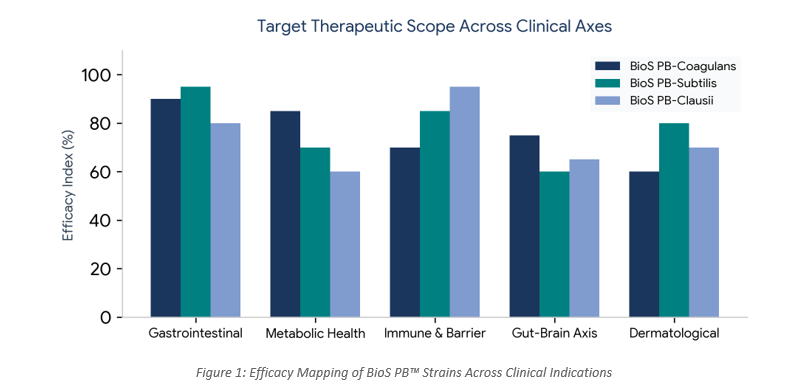
14. Comprehensive Clinical Indication Matrix with BioS PB Line
| BioS PB™ Strain | Clinical Axis / Indication | Target Mechanism & Physiological Pathway |
|---|---|---|
| BioS PB-Coagulans (B. coagulans) | IBS & Functional Bloating | L(+) lactic acid production reduces luminal pH, suppressing gas-producing pathogens and accelerating gastric emptying. |
| BioS PB-Coagulans (B. coagulans) | Metabolic Health & Insulin Resistance | Modulates SCFA ratios (acetate/propionate), activating GLP-1 secretion and lowering systemic low-grade C-reactive protein (CRP). |
| BioS PB-Coagulans (B. coagulans) | Gut-Brain & Stress Response | Attenuates cortisol response via the vagus nerve and promotes short-chain fatty acid stimulation of central neurotransmitters. |
| BioS PB-Subtilis (B. subtilis) | Small Intestinal Bacterial Overgrowth (SIBO) | Produces antimicrobial peptidase (surfactin) to inhibit opportunistic pathogen overgrowth in the upper GI tract. |
| BioS PB-Subtilis (B. subtilis) | Macronutrient Malabsorption | Secretes robust bio-available enzymes (proteases, amylases, lipase) to enhance protein breakdown and micronutrient bioavailability. |
| BioS PB-Subtilis (B. subtilis) | Gut Barrier Integrity (‘Leaky Gut’) | Up-regulates expression of tight-junction proteins (Claudin-1, Occludin), reducing lipopolysaccharide (LPS) translocation. |
| BioS PB-Clausii (B. clausii) | Post-Antibiotic Dysbiosis | Intrinsic resistance to major antibiotic classes allows simultaneous colonization to prevent Opportunistic Infections (e.g., C. difficile). |
| BioS PB-Clausii (B. clausii) | Mucosal & Systemic Immunity | Stimulates local Secretory IgA (sIgA) synthesis and modulates IL-10 / TNF-alpha cytokine equilibrium in intestinal mucosa. |
| BioS PB-Clausii (B. clausii) | Dermatological Gut-Skin Axis | Reduces systemic endotoxemia contributing to acne, eczema, and cutaneous inflammatory flare-ups. |
15. Strategic Formulation Stacking
By combining strains with distinct physiological targets, clinicians can design comprehensive biotherapeutic regimens:
• Metabolic & Inflammatory Regimen: Combine BioS PB-Coagulans + BioS PB-Subtilis to suppress CRP levels, reduce systemic LPS burden, and improve postprandial glucose stability.
• Immune Barrier & Microbiome Recovery: Combine BioS PB-Clausii + BioS PB-Subtilis during antibiotic treatments to preserve sIgA defenses and maintain tight-junction seal integrity.
• Gut-Skin-Brain Axis Optimization: Combine BioS PB-Coagulans + BioS PB-Clausii for patients presenting concurrent IBS symptoms, anxiety, and cutaneous inflammation.
Conclusion
The future of probiotics is likely to be more personalized, evidence-driven and data-enabled. Precision nutrition provides a framework for moving beyond the one-size-fits-all probiotic toward interventions that consider the individual’s microbiome, diet, physiology and desired outcome.
The opportunity is substantial, but the field is still developing. Personalized probiotic strategies should not be presented as a fully established clinical practice today. The next decade will be defined by the ability to connect microbiome measurements with reproducible biological mechanisms and clinically meaningful outcomes. When that evidence matures, probiotics could evolve from broadly marketed wellness ingredients into precisely selected components of personalized nutrition and healthcare.
Selected References
- International Scientific Association for Probiotics and Prebiotics (ISAPP). The Promise of Personalized Medicine. 2025.
- Marco ML, et al. ISAPP consensus statement on the definition and scope of gut health. Nature Reviews Gastroenterology & Hepatology. 2026.
- Can diet shape the effects of probiotics or prebiotics? ISAPP, 2022; updated 2025.
- From One-size-fits-all to Precision Medicine: The Promise of Personalized Probiotics. Beneficial Microbes / Springer review literature, 2025.
- The role of probiotics in personalized therapeutics: Advances in gut microbe-driven interventions. The Microbe. 2025.
.svg)